
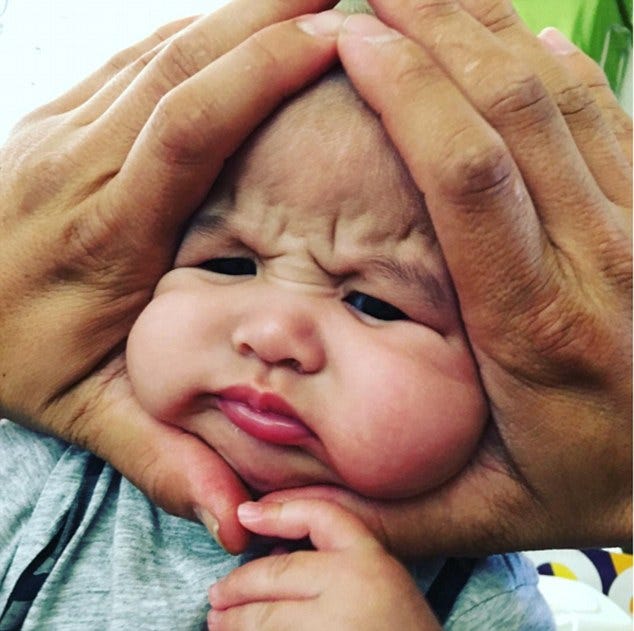
Viewed through the right lens, you might think you have never, in the history of humanity, witnessed something as adorable as a kitten struggling to keep its balance, paws sliding across a slippery wooden floor. You might wish to pet its downy little head and stroke its soft fur. But part of you also wants to squeeze it. And maybe even put it in your mouth. You don’t, however. And if you did, you might also think you’re kind of a monster.
It’s called “cute aggression,” and it’s so common, the New York Times reports, that half of adult humans have actually experienced it.
To understand why, it might help to think about what it means for something to be cute. The theory of baby schema, for instance, was identified in a study in 1943, the Times says, as a certain set of physical features, like plump cheeks, round face, large eyes and a small chin and nose, that many mammals have when they are babies.
Decades of study have since indicated that this baby schema reliably tracks with how people perceive cuteness. When study participants see images containing more features that the baby schema pinpoints as cute, they tend to look at them longer and more often. The photos also appear to stimulate brain regions associated with emotion and reward.
Cuteness is also thought to influence behavior. In a 2009 study, participants performed better at the game Operation — which demands precise, careful movements — when shown cute images beforehand. The results of another study indicated that people use recycling bins more when they have cute images on them.
The fact that cuteness hijacks our emotions is certainly not lost on authorities and advertisers. But why does cuteness have this hold on us? It’s nearly impossible to know for sure, but one theory is that cute things simply make us want to nurture them. Because human babies are relatively helpless on their own, it’s hypothesized that evolution favored infants who were perceived as cute and inspired more care and interaction.
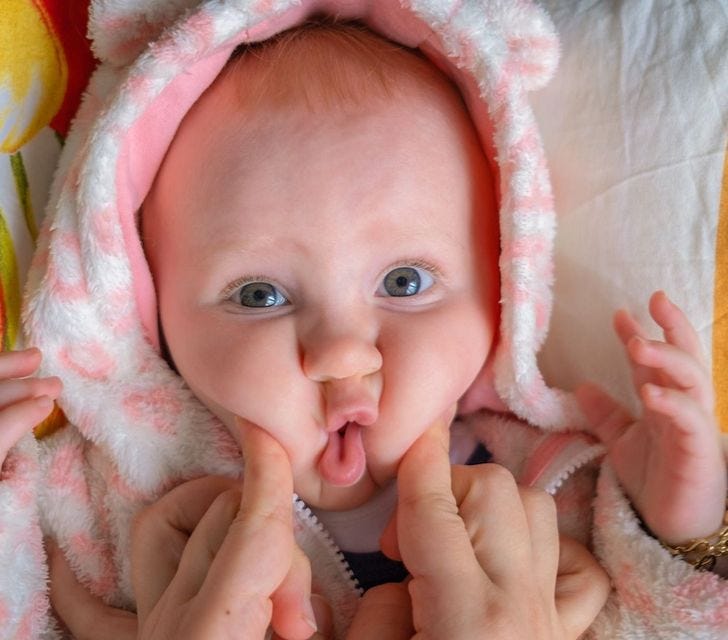
And, being acutely sensitive to cuteness, we’re tuned into similar features in other species. In fact, as we domesticated animals, their appearances tended to change too. Some scientists have noted a phenomenon called “domestication syndrome,” where certain animals appear to have gradually adopted more juvenile features as they became more docile.
One theory is that these physical changes are regulated by an embryonic structure called the neural crest. It helps determine how some of a developing embryo’s cells differentiate and where they go. Delaying or inhibiting the arrival of these cells in certain areas of the body can result in an underdevelopment of the pituitary and adrenal glands, which govern fear and aggression. It can also lead to physical characteristics like floppier ears, shorter snouts, and smaller jaws. This is one idea of how selecting for behavioral characteristics like friendliness may also select for more juvenile, cuter physical traits.
Basically, as humans bred and domesticated docile dogs, we seem to have made some breeds look more like babies. Some scientists theorize that we may have even domesticated ourselves. The thinking here is that as ancient humans formed larger, more cooperative groups, they selected friendlier individuals. This may have then led to some of the physical characteristics that distinguish us from our closest evolutionary cousins, like smaller, rounder skulls and subtler brow ridges.
But if cuteness is related to nurturing and decreased aggression, why would anyone ever want to squeeze or bite cute things? Well, cute aggression is importantly, not linked to the actual intention to do harm. Instead, it seems to result from emotional overload.
Some scientists think that cute things elicit such positive emotions from certain people that the experience becomes overwhelming. They hypothesize that slightly aggressive, discordant thoughts are the brain’s way of putting the brakes on and regulating those intense feelings — not getting you to actually eat a kitten.
Cuteness can come off as a frivolous, innocent quality, but it wields immense, consequential power. Not to be aggressive, but cuteness kind of runs the world.