
The most fundamental question that people can ask about their lives is: ‘What gives a life meaning, depth, and worth?’ The question of how to live well — of how to strike a delicate balance between conflicting ends and objectives — ranks high among the most pervasive issues of human life and the most basic questions of human existence.
The answers to these perennially important questions cannot but touch upon the essential conditions of what it means to be human, be free in whatever sense we might identify, and embrace that concept. To be sure, what exactly constitutes flourishing, or abundant, as the Romans translated the Greek word eudaimonia, will look a lot different from one person to another. But there seem to be four primary features that lend any life, no matter how flawed, some ultimate sense of value: a sense of purpose, of affinity and love, of growth and development, and of contributing to a cause or enterprise that transcends the self and thereby shapes the world in significant ways.
The Importance of Purpose
Purpose lies at the heart of any life worth living. By offering goal direction and a reason for action, purpose can help illuminate the way through the vagaries and struggles of an uncertain life.
This is your journey, but your purpose can help to show you the way.
Purpose gives our lives meaning and gives us a reason to get out of bed in the morning. For some, their purpose engages with a career, for others, it engages with their family life and bringing up children, and for others, engages with a creative or humanitarian activity. Whatever form it takes, a clear sense of purpose can help focus your life and make it more meaningful.
Back in 1946, the psychiatrist and Holocaust survivor Victor Frankl published Man’s Search for Meaning, in which he extolled the value of being purpose-driven.
‘We who lived in concentration camps can remember the men who walked through the huts comforting others, giving away their last piece of bread’
He wrote. ‘They may have been few in number but they offer sufficient proof that everything can be taken from a man but one thing: the last of the human freedoms — to choose one’s attitude in any given set of circumstances—man’s spirit is capable of raising itself to such heights.’ In other words, even in the most hopeless of situations, when little except our perspective (or attitude) could be considered under our control, those who had a purpose for their lives were best able to persevere.
The Power of Relationships
Human beings are social. The quality of our relationships with family, friends, and the wider community is a key factor in making life worth living. Good relationships bring emotional support, promote a feeling of belonging, and contribute to our sense of security and stability. They bring joy, love, and comradeship, enriching our lives in every way.
Indeed, the overall body of evidence shows that having a good network of social ties leads to better mental health outcomes, a longer life, and higher levels of happiness, while loneliness and social isolation are associated with poor physical and mental health.
you should be willing to invest time and effort in your social ties.
Personal Growth and Self-Actualization
A second essential component of a flourishing life is growth. This lends weight to the view of early Buddhism that life is valuable, not in some mysterious way, but because it offers us the opportunity to improve, learn, and prepare for death. Growth, we might say, is our potential as human beings. It is the quest to become more insightful, proficient, understanding, brave, self-aware, and resilient, to exercise our potential to the fullest. If personal flourishing is self-transformation, then growth is what makes it possible. Personal growth encompasses many things: learning something new, improving an old skill, developing empathy or resilience, etc.
In his ‘hierarchy of needs’, the US psychologist Abraham Maslow held that self-actualization was the highest level of psychological development; it involved the actualization of one’s potential, the complete realization of one’s talents and abilities. In Maslow’s view, the self-actualized person was able to become fully human, achieving a state of wisdom and esteem. From this, one could experience peak experiences, moments of deep absorption, and intense joy and serenity.
Contribution to Something Greater
Contributing to a cause greater than one’s self, such as through volunteer work, activism, philanthropy, or other acts of kindness and compassion, can be a vital component of the good life. Not only does contributing to others’ well-being make the world a better place; but it can also enhance one’s sense of meaning, even in the midst of struggles.
One explanation for this popularity could lie in the fact that doing good by helping others or tackling social ills facilitates an afterlife of meaning. The sense that one has contributed to something larger than oneself that will live on after one’s death is a deeply powerful, even triumphant, legacy, comparable to the great exploits of epic heroes. Furthermore, this goodwill also strengthens the notion of the unity of mankind.
Of I being you and you being I
Balance and Well-Being
Balance in living a life worth living also involves finding a balance between different areas of our lives, including leisure and personal relationships. With this balance, we can sustain our overall well-being and avoid job burnout and stress. To this end, mindfulness, self-care, and the ability to ‘roll with the punches’ and adapt will be central.
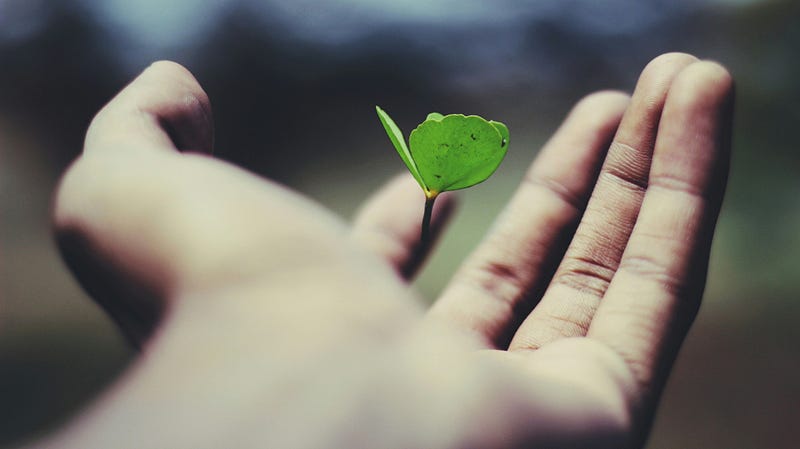
To put all of this into a nutshell, a good life is a life directed from within, one in which we have enduring relationships, one in which we are continually growing and becoming more of who we aspire to be, one in which we’re contributing to something larger than ourselves, one in which there is meaning, joy and flourishing on happy days as well as good meaning and flourishing over a lifetime. Whereas there are innumerable possible ways to live a good life, there are also some important universal aspects.
A good life, in my view, has these five markers. If the markers are present, then life is worth living, valuable, or good. By approaching life in light of these markers, we can navigate the everyday vicissitudes of existing well together, and we can live well — on happy days and, perhaps, at the end of our lives.