
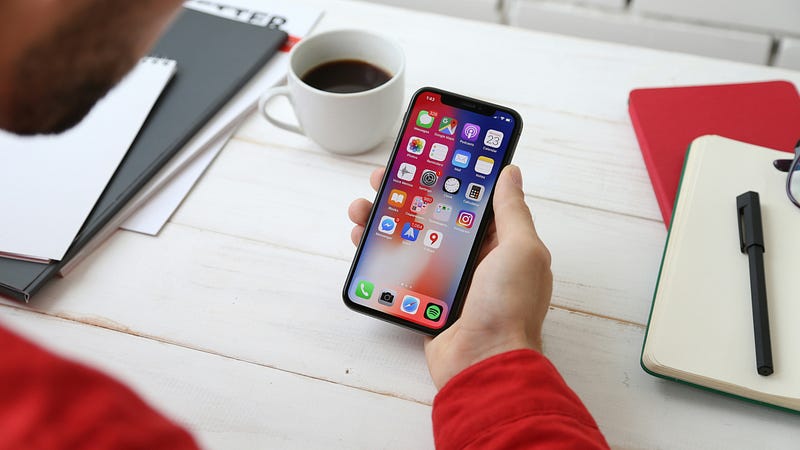
Reading this on your phone right now? So am I, and billions of other people. We’re all obsessed with our phones. So much so that our brain has chosen phones as this week’s theme. But what effect can that little gadget have on your body and your brain?
I will start with posture, a huge problem we get when we hunch over our screens, resulting ourselves usually looking like an eight-year-old sitting on our head. Screen time on computers or phones is proven to be a risk factor for needing glasses, to the point where by 2015, half the population needed glasses compared with 25 per cent in 1970. In some parts of Asia it is as high as 90 per cent!
It is not easy to put down the phone. Ever play Candy Crush or another phone game and then experienced that slightly increased glow when you beat a level (it was just one level!)? That is what’s called a reward, a small spike of dopamine. You experience that same little reward when you eat your favourite food or get a hug. The problem is that our brains tend to like new things — we experience new things, once, but then they become mundane, part of the background. Meanwhile, your phone is always giving you something new — it’s like an endless buffet. That’s why it can be difficult to stop.
Do you feel panicky when you don’t have your phone? You might have Phonephobia! Yes, this is an actual word — the fear of being without your phone. Believe it or not, we can feel anxious about using it, too. For instance, studies show using our phones can alter our ability to focus. Our brain waves speed up when on a call, compared with when we are off the phone, having a conversation or working away on a screen.
Another way that phones can interfere with our wellbeing is by impairing our sleep. We all know that reading screens before bed interrupts our sleep cycle. The specs of blue light that pass through our eyes trick the brain into thinking it is still daytime. Not sleeping enough can lead to excessive weight gain and even diabetes. Giving our phones a break before bed is one of the most-suggested interactions with phones by experts. Want to unwind before bed? How about a good book?
However, it is by no means all doom and gloom. With phones, people are able to look up information and reach out to each other, especially in parts of the world where infrastructure is lacking or of poor quality. In essence, phones are tiny supercomputers that fit in our pockets. They help us do everything from finding employment to staying in touch with our loved ones.
Some celebrities are even reporting that they are quitting phones because it improves their productivity. It’s micro-management at it’s finest. It’s whatever works for us.
In other words, there is nothing wrong with phones per se. These are remarkable tools. I just need to be mindful of how much time I spend on them — so should you. Let’s get the best out of technology, and let’s look after our bodies and minds at the same time.
We need boundaries to use phones in healthier ways, so start with small steps. Set regular times in the day for phone-free experiences such as meals, first thing in the morning, or last thing at night. Use apps that track your daily screen time in order to gain greater awareness of how much screen time you use. Try your best to use your phone when you need it, not simply for idle scrolling, whether you’re avoiding people, killing time in an Uber, or dealing with boredom. Make an effort to do other things between phone uses, like take phone breaks to stretch and give your eyes a break. And remember it takes practice — use it, set limits and boundaries, then put the phone down and engage with the world around you. If you can carve out a technological niche where you feel good, have fun and make meaningful connections, on the screen and off, you will have made a space that works for you.
All in all, it’s about finding that middle ground between connection and self-care.