
Now, more than ever, in the era of the digital screen, we need to ensure that the next generation is not only being raised as readers but that we are encouraging them to read. Reading is an activity that is powerfully pleasurable, utterly unique, and irreplaceable in its psychological form, and it offers children an extraordinary kind of mental exercise.
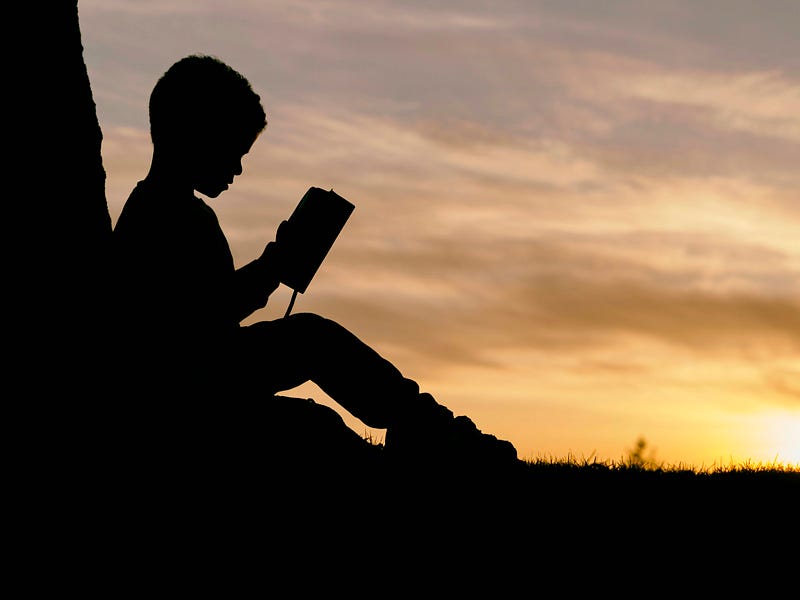
The Joy of Reading
The pleasure of reading is so inherent that, in the right circumstances, children will read for the sake of reading, regardless. They will delight in falling into another world, they will relish discovering a new character, and they will thrill to a new story or place. Reading for the sheer enjoyment of it offers exhilaration, with the safety of an escape route into an imaginary world. Children who experience the pleasure of reading are far more likely to read for life. A world of problems can fade when a child immerses herself in a good book.
Mental Exercise and Cognitive Development
Reading, in its determined execution, gives young brains a cadence and quality of cognitive practice that no other media medium can muster. Children reading can break a word down, code it for meaning and memory, and exhume the sentence line to line to make sense of a narrative. The cognitive workout builds vocabulary, comprehension, and memory. Research shows that children who regularly read do better in school; their cognitive functioning is among the highest tested.
Imagination and Creativity
Another sublime gift that reading bestows is a chance to hone creativity and imagination — to open the child’s mind and let it wander. Across the page, children face Minecraftian ‘blocks’ that they must turn into a three-dimensional world; the blank canvas of the page’s page where they create, through a type of Ouija board that leads with questions instead of answers. Unlike screen-based media, where the concrete grounds for impressions are placed in the child’s eye by the media itself—”Here are pictures and sights for you”—with text, children have to construct the world for themselves. They need to imagine the characters, scenes, and events themselves. For the child, that is a pure gift. No other media does that for the child. Flirting with something that’s not real, in our imaginations, for the fun of it, teaches children to focus and dream beyond their real, outer world.
Empathy and Emotional Intelligence
It’s also a profound means to cultivate empathy and emotional intelligence, which a child needs to function effectively in the social world, as he or she grows up. The child who becomes immersed in a narrative world becomes exposed to the worldviews of characters wholly different from his or her own. Social scientists have found that the better individuals can cognitively simulate the mental state of others, the more empathetic they are. A neuroscientific study at Emory University in Atlanta helped elucidate how readers simulate characters’ feelings. First, the psychologists identified specific patterns of brainwaves and reactions of muscles in the faces of adult participants when they read stories of fictional characters experiencing their emotions. Then, they measured the same brainwave patterns in the children’s brains. The children’s neurological responses mirrored those of the empathetic adult participants. Reading plays an essential role in acquiring empathy and emotional intelligence.
Critical Thinking and Problem-Solving
Through stories, characters are exposed to difficult situations that need to be solved. As a response, the child ‘reads’ better by improving her ability to question, anticipate, and analyze, improving her logical thinking. This makes her ready for school and life in general. The world will be full of readers who will be more creative in dealing with the challenges of the future.
A Gateway to Knowledge
Reading opens the world for the child. It puts into his hands a multitude of new ideas and experiences: new concepts of what is possible in the world; new ways of understanding peoples and cultures; new worlds of imagination, whether pure fantasy or more encompassing and grounded mythologies that underpin the entire culture. In this way, reading can become a lifelong source of curiosity and wonder. The world changes rapidly, but the ability to find and understand new information is a lifelong gift.
The Irreplaceable Experience of Reading
Although digital media can provide information fast and frequently, in passive ways, reading forces us to slow down, to think in slow motion, so to speak. It demands tact. It is a slow, thoughtful experience, and it leans on our sensory experience, from the feel of the book in our hands, to the smell of a book, to the measured turn of a book’s page. This is something the grab-screen can’t touch. This haptic intimacy can leave a permanent impression, establishing a relationship with a book and a sense of ownership.
Not simply a generation of people who have made reading a habit, but minds that are curious, imaginative, sympathetic, and self-reliant. Reading is like mental exercise — unlike any other media, it triggers all of our mental faculties, fostering cognitive development and creativity, and encouraging critical thought. At a time when children are sentencing themselves to a life of pixel-gazing, it’s more important than ever to offer them the parallel universe that can be accessed through the pages of a book. The timeless pleasure children get from reading, and the age-old benefits of doing so, are as real for them as they are for their parents. To inspire children to love books, then, is to help them develop richer and more vivid, more informed, and more imaginative lives.